
Why solar makes sense in Dubai
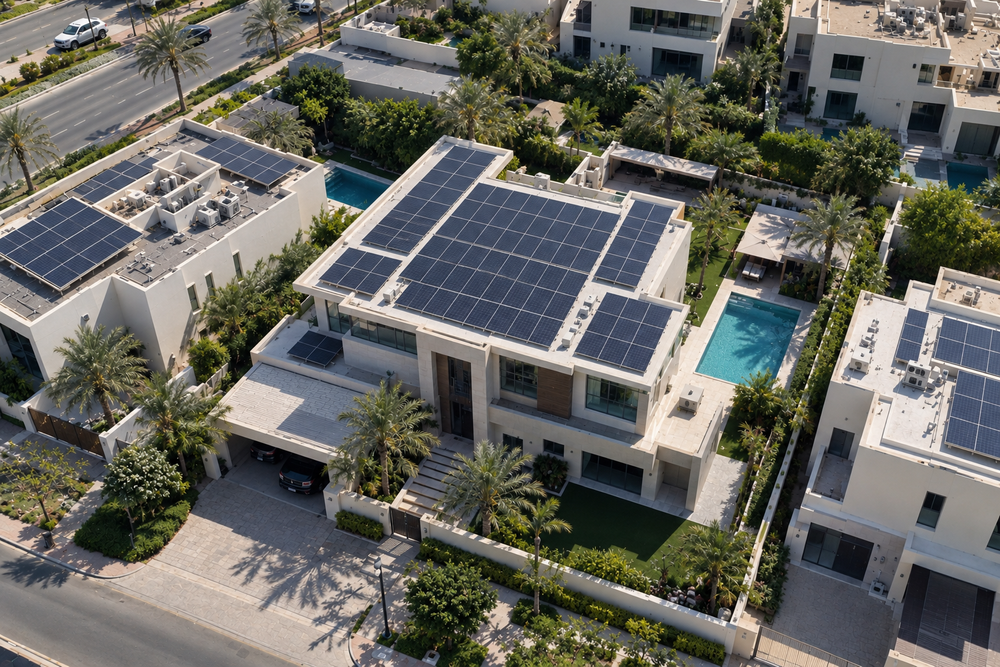
Dubai has some of the strongest sunshine on the planet, and DEWA charges more per unit the more electricity you use. Solar turns both into lower bills, month after month, for decades.
- Cuts out your most expensive summer AC units first
- Extra power earns credit on your DEWA bill through Shams Dubai
- Zero upfront with finance, and nothing to pay until it's installed
The numbers behind the switch
Dubai is one of the best places in the world for rooftop solar. Here's why the maths works for villa owners.
DEWA tiered rates
Each kWh costs more as usage rises, so solar removes your priciest units first.
Sunny days a year
Your panels produce power almost every day, all year round.
Typical payback
After that, the power your system makes is effectively free.
Panel lifespan
Tier-1 panels keep producing for decades after payback.
Clean energy by 2050
Dubai's Clean Energy Strategy target, backed by DEWA's Shams Dubai programme.
Figures are indicative. DEWA residential tariffs exclude fuel surcharge and VAT. Payback varies by system size, usage and roof.
Solar cuts your most expensive units first
DEWA charges residential electricity in four tiers. The more you use in a month, the more each extra unit costs. Villas with big summer AC bills end up paying the top rates.
- 1Your panels power your home firstEvery unit your roof produces is a unit you don't buy from DEWA.
- 2The top tiers disappear firstSolar reduces your total usage, so the units you stop paying for are the ones at the highest rate.
- 3Extra power becomes bill creditUnder Shams Dubai, surplus power is credited to your DEWA account and carries forward to future bills.
See it on your bill
Drag to match your monthly electricity use. Summer bills are usually highest.
Illustrative only. Based on DEWA residential electricity slab rates plus a 6 fils/kWh fuel surcharge and 5% VAT, and average monthly solar production of about 125 kWh per kW installed. Excludes water, meter and housing fees. Your quote will be based on your actual bills and roof.
Get My Exact SavingsHow DEWA's net metering works for your home
Shams Dubai is DEWA's programme that lets homes connect rooftop solar to the grid. You use your own power first, and anything extra is credited to your DEWA account.
-
1
Your panels generate power
Solar panels on your roof turn Dubai's sunshine into electricity throughout the day.
-
2
Your home uses it first
Your AC, pool pump and appliances run on your own solar power before drawing from DEWA.
-
3
Extra power goes to the grid
Any surplus flows to DEWA's grid through a two-way smart meter fitted during switch-on.
-
4
You earn bill credits
Exported power is credited to your DEWA account and used to offset future bills, such as at night or in peak summer.
Good to know about Shams Dubai
The rules most Dubai homeowners ask us about. We handle every approval for you.
Check If My Home Qualifies-
Credits carry forwardUnused credits roll over to future bills. They're bill credits, not cash payments.
-
Approved contractor requiredDEWA only accepts applications through enrolled solar contractors with certified engineers.
-
Developer NOCMost villa communities need a No Objection Certificate from the master developer or community management.
-
Rooftop systems onlyPanels go on the roof or building structure. Ground-mounted systems aren't eligible.
-
Sized to your homeSystem size is capped based on your property's connected electrical load, which we check for you.
-
Inspected by DEWADEWA inspects every system before switch-on, so installs must meet its safety and equipment standards.
More than just a lower bill
Rooftop solar pays you back every month, and the benefits keep adding up for as long as you own your villa.
Lower DEWA bills
Cut your monthly electricity costs, starting with the expensive top-tier units from summer AC.
Protection from price changes
Every unit you generate is one less exposed to future tariff or fuel surcharge changes.
Adds appeal to your villa
Lower running costs make your home more attractive to future buyers and tenants.
Optional battery backup
Add a battery to store solar power and keep essentials running during an outage.
Low maintenance
No moving parts. Occasional panel cleaning and system monitoring keep it running at its best.
Cleaner energy
Cut your home's carbon footprint and support Dubai's goal of 75% clean energy by 2050.
Check your home, and clear up the myths
Most Dubai villas and townhouses are a great fit for solar. Tick what applies to you, and see the facts behind the questions we hear most.
Quick suitability check
Tick everything that applies to your home.
Apartments usually can't install individual systems. Building-wide solar is managed by the building owner.
Myths vs facts
The questions Dubai homeowners ask us most.
-
Myth
It's too hot in Dubai for solar.
FactPanels lose a little efficiency in extreme heat, but Dubai's strong, year-round sun more than makes up for it. We use equipment rated for high temperatures.
-
Myth
Dust and sand will ruin the panels.
FactDust lowers output for a while, but it doesn't damage quality panels. Occasional cleaning restores full performance.
-
Myth
DEWA pays me cash for my extra power.
FactUnder Shams Dubai, extra power earns credits on your DEWA bill that carry forward. They aren't paid out as cash, so systems are sized to your usage.
-
Myth
I need a battery to go solar.
FactNet metering works without a battery. A battery is an optional extra for backup power during outages.
-
Myth
Solar is too expensive to get started.
FactWith our finance option there's no upfront cost, and nothing to pay until your system is installed. Most systems pay for themselves in around 5–8 years.